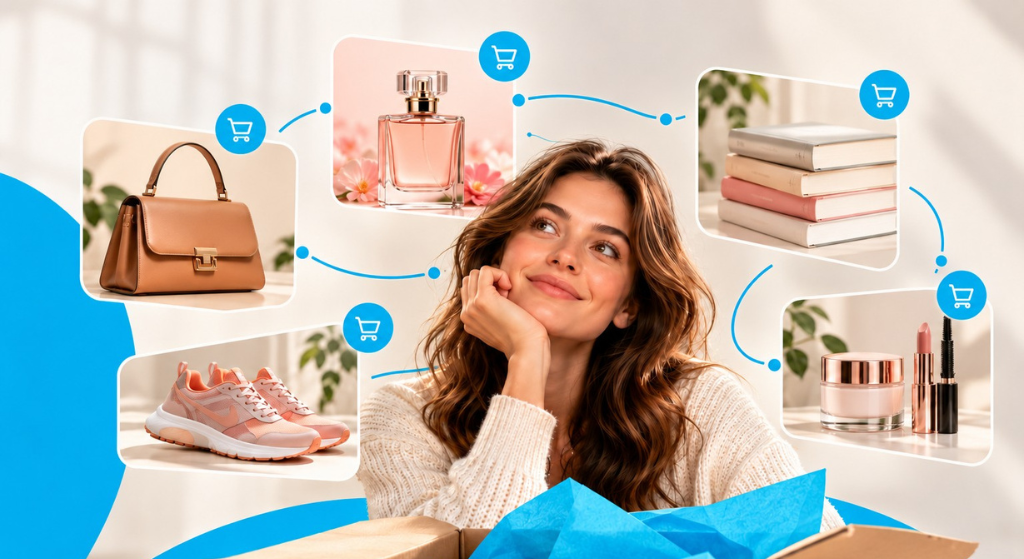
If you sell handbags, where would you look for new customers? In fashion e-shops? That sounds logical.
But the same customer might order perfume one day, a book the next, and sportswear a week later.
Customer needs don’t follow the boundaries of product categories.
And that’s exactly where an opportunity lies for brands looking to reach new audiences through insert marketing.
Don’t Look for Similar Products. Look for Shared Customers.
When planning advertising inserts in parcels, it’s natural to choose e-shops from related industries. A cosmetics brand might focus on the beauty segment, while a sports accessories manufacturer might target sports retailers.
This approach makes sense, but it can also mean overlooking other opportunities.
What matters is not just what an e-shop sells, but above all, who shops there.
For example, a brand offering sleep-related products might also find potential customers among people who buy sports equipment. Both audiences may share an interest in recovery and a healthy lifestyle.
This doesn’t mean that such a combination will automatically deliver results. However, it represents an interesting targeting opportunity worth testing.
When Fashion Meets Beauty: A Real-World Example
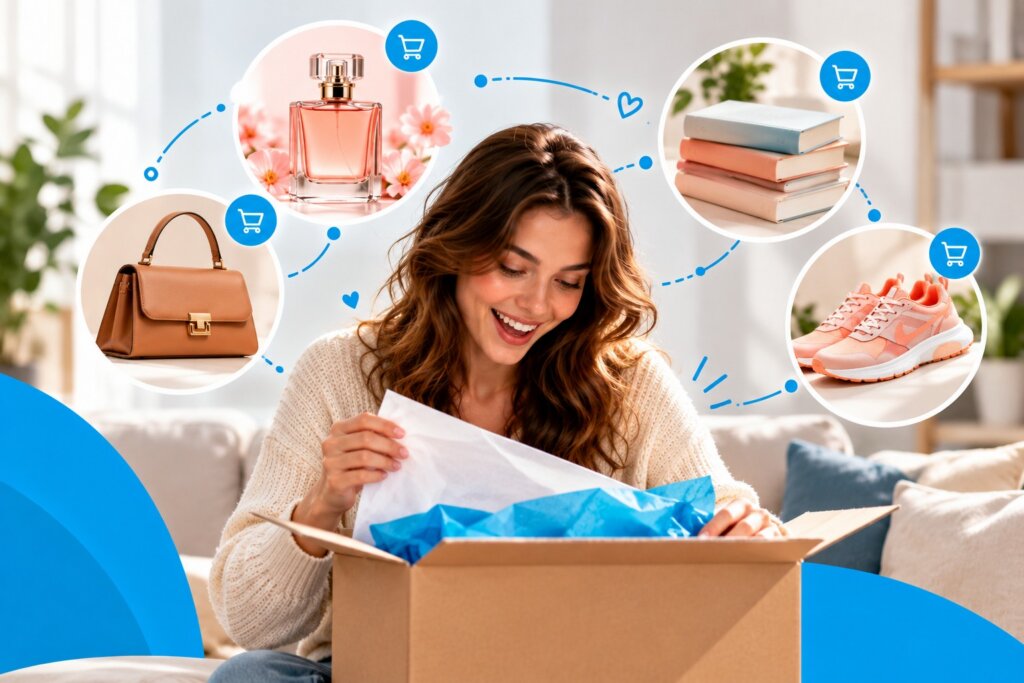
A similar approach was used by DAJANA RODRIGUEZ, which distributed its vouchers through Notino’s loyalty envelopes in cooperation with CSOMAG PLUSZ.
Although handbags and cosmetics belong to different product categories, both brands may appeal to customers who share an interest in beauty, style, and premium products.
According to the campaign evaluation, new customers outside the loyalty programme accounted for 37% in Slovakia and 48% in the Czech Republic. These figures represent the share of new customers, not the response rate across all distributed vouchers.
The campaign demonstrates that a brand can reach new customers through an e-shop operating in a different product category.
When selecting a distribution partner, it is therefore worth looking beyond the product range and considering the shared interests and needs of customers.

Read the DAJANA RODRIGUEZ case study.
How to Choose the Right Distribution Partners
When planning a campaign, it’s worth considering e-shop selection from three perspectives:
- Customer profile: Who is our ideal customer, and which other e-shops are they likely to shop at?
- Shared needs: What connects our brand with customers from another industry?
- Relevant offer: What benefit could be compelling enough to encourage customers to try our brand?
The next step is to test the selected combinations and monitor specific results, such as response rates, the share of new customers, or order values.
When choosing distribution partners, don’t just look for similar product ranges. Look for customers with similar needs.
At CSOMAG PLUSZ, we help brands identify relevant target audiences and reach them through parcels shipped by our partner e-shops.
Discover how insert marketing can help your brand reach the right audience.

